My Autism Mom Era T-Shirt Design: An Embroidery Review
When I first opened MY AUTISM MOM ERA TSHIRT DESIGN, I felt an immediate sense of warmth paired with bold self-expression. The design carries a sentiment that resonates deeply with a growing community of proud, vocal parents, and that emotional hook is something I always look for in a design asset meant for handmade products. As someone who has tested hundreds of embroidery files and graphic designs over the years, I can tell when a piece has the kind of genuine personality that translates well into stitched projects. This one does. It feels personal, declarative, and surprisingly versatile for something rooted in a very specific phrase.
What stood out to me right away was the clean vector structure. Knowing the design is built from fully resizable vector shapes gives me confidence before I even open it in my software. For embroidery digitizing or print-to-stitch adaptation, having crisp edges and scalable elements means fewer headaches when converting artwork into stitch paths. The mood strikes a balance between playful and earnest, which is exactly the kind of tone that sells well on custom apparel, tote bags, and personalized gifts. It does not try too hard to be trendy. Instead, it leans into honesty, and that matters when a buyer is looking for something that represents their identity.
The Visual Personality and Stitching Potential
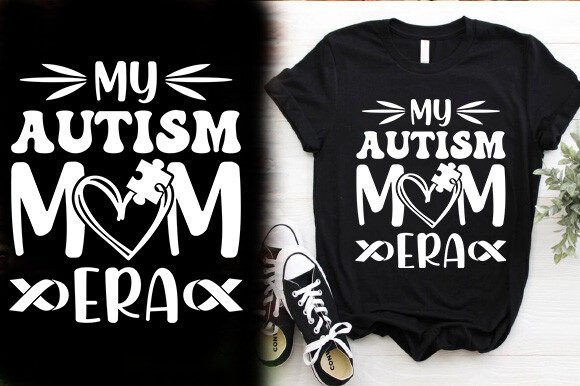
Looking closely at MY AUTISM MOM ERA TSHIRT DESIGN, the typography and layout suggest a design that would hold up well under satin stitch or a well-planned fill stitch approach. The letterforms appear intentionally shaped, which helps when I mentally map out how thread would lay on fabric. Thin, wispy fonts can become a nightmare on textured surfaces, but this design seems to have enough substance in its shapes to avoid that pitfall. I would still recommend test-stitching on a similar fabric before committing to a full production run, especially if you are planning to use it on something like a plush baby blanket or a ribbed sweatshirt where the fabric texture can fight against fine details.
The design also offers room for color customization, which is a major advantage for embroidery designers. A phrase like this works well in soft pastels for nursery decor or baby embroidery, but it can also shine in bold, high-contrast thread colors for a cap or an embroidered patch. I appreciate that the original description highlights easy color modification because that flexibility directly affects how many different product listings a single design can support. If you run a craft business or sell on Etsy, being able to offer the same design in multiple thread color options increases your catalog without adding extra design costs.
Where This Design Truly Belongs in Embroidery Projects
I immediately pictured MY AUTISM MOM ERA TSHIRT DESIGN stitched onto a soft, structured tote bag. A few weeks ago, I was preparing a batch of custom embroidered totes for a local boutique order, and a design like this would have slipped perfectly into that collection. The phrase carries enough weight to stand alone on a blank canvas, which is exactly what you want for a tote bag design. It does not need supporting graphics or decorative flourishes to feel complete. That simplicity is a strength when you are working with embroidery files because every unnecessary element adds stitch time, thread changes, and potential registration issues.
Beyond totes, I see strong potential for crewneck sweatshirts and relaxed-fit t-shirts. A sweatshirt embroidery with this design positioned across the chest would have that effortless, storyteller quality that boutique customers gravitate toward. I also considered how it would perform on a pillow cover, perhaps as part of a nursery or playroom decor set. The wording is gentle enough for a child's space but carries a message that parents connect with on a deeper level. For holiday embroidery, this could easily be incorporated into a personalized gift package, maybe paired with a coordinating monogram or a small applique accent.
Caps, Patches, and Smaller Applications
On a cap or hat, the design would need to be carefully sized. Curved surfaces always challenge wider layouts, so I would test a scaled-down version before assuming it fits standard cap hoop dimensions. The vector-based structure helps here because resizing does not degrade quality, but the stitch density would still need adjustment at smaller scales. For an embroidered patch, I think this design could work beautifully. Patches allow for tight, controlled stitching on a stable backing, and the phrase style suits the patch format well. A patch version could become a standalone product in a small shop, especially for customers who want to personalize their own jackets, backpacks, or baby bags.
Fabric Considerations and Real-World Durability
Not every fabric plays nicely with every design, and MY AUTISM MOM ERA TSHIRT DESIGN deserves a thoughtful substrate choice. On thin or highly stretchy fabrics, lettering-heavy designs can distort over time if the stabilizer is not chosen carefully. I would avoid using this on ultra-light jersey without a quality cutaway stabilizer backing it up. For dark fabrics, thread color contrast becomes even more critical. A design that looks crisp on screen can lose clarity on a black t-shirt if the thread color does not pop enough against the background. Testing on both light and dark fabric swatches is a step I never skip, and I would recommend the same here.
On textured surfaces like waffle-weave kitchen towels or loosely woven blankets, the finer details could blur. I lean toward using this design on smoother cotton, canvas, French terry, or tightly woven linen. For baby embroidery, a soft cotton onesie or a muslin blanket would pair well, but I would keep the stitch count moderate to avoid a stiff feel against delicate skin. The emotional tone of the design naturally suits baby items, making it a strong candidate for baby shower gifts or newborn welcome sets.
Testing and Refining Before Production
Before listing any product featuring MY AUTISM MOM ERA TSHIRT DESIGN, I would go through a short but essential testing routine. First, stitch it out on scrap fabric that matches your intended final product. This reveals how the vector shapes translate into actual thread behavior. Second, review the stitch density. Too dense, and you risk puckering and thread breaks. Too light, and the design loses visual impact. Third, test in black and white by printing a paper mockup or running a grayscale preview. If the design still reads clearly without color, it will likely hold up well across different thread palettes and fabric backgrounds.
Hoop size is another factor to confirm early. While the vector artwork is resizable, your embroidery machine has physical limits. Measure the design at your intended stitch size and ensure it fits comfortably within your available hoop options. Leave enough margin for hooping without crowding the frame edges. I have seen too many good designs get compromised because they were squeezed into hoops that were technically large enough but practically too tight for clean stitching.
Branding, Customer Trust, and the Emotional Purchase
From a business perspective, MY AUTISM MOM ERA TSHIRT DESIGN taps into an emotional purchase driver. Buyers looking for this phrase are not casually browsing. They are searching with intention. They want something that speaks to their experience, and when they find it, they are far more likely to trust a seller who presents it beautifully. This is where your product photography, mockup presentation, and overall brand consistency come into play. A well-stitched version of this design, photographed on a clean, well-lit garment, builds immediate credibility. A sloppy stitch-out shown on a wrinkled shirt does the opposite.
For Etsy sellers and small shop owners, the design's theme supports storytelling in your listing descriptions. You can speak directly to the buyer's identity without over-explaining. The design does the heavy lifting, and your job is to show it in its best light. I also appreciate that the design is described as ready to print on t-shirts, stickers, and apparel, which suggests it can serve multiple product categories beyond embroidery alone. That cross-product flexibility adds value for creative entrepreneurs who sell across different mediums.
Licensing, Commercial Use, and Final Checks
Whenever I review a design for my own projects or recommend one to fellow makers, I emphasize the importance of confirming licensing. The product description does not explicitly outline commercial embroidery terms, so I would reach out to the seller or check the included license file before selling finished items or digital embroidery files derived from the artwork. This is not a limitation unique to this design. It is simply good practice. Protect your business by knowing exactly what usage is permitted.
I also want to highlight that while the vector-based structure simplifies modification, any changes you make should still be tested thoroughly. Adjusting colors for different thread brands, tweaking letter spacing, or resizing for different hoop dimensions can introduce subtle issues that only become visible after stitching. A quick test run saves you from disappointed customers and wasted materials later.
Where This Design Shines Brightest
After spending time evaluating MY AUTISM MOM ERA TSHIRT DESIGN from every practical angle, I keep returning to its emotional clarity and adaptable structure. It fits naturally into handmade product lines that celebrate identity, family, and personal milestones. It works on apparel, home decor, accessories, and gifts. It invites color exploration without losing its core message. And it feels genuinely useful for a craft business that wants to offer something heartfelt without chasing fleeting trends.
For embroidery designers, small business owners, and makers building a product catalog around meaningful themes, this design earns its place. It is not overcomplicated, not underwhelming. It sits in that sweet spot where good design meets real-world usability. Test it, respect the fabric, choose your thread thoughtfully, and let the stitching bring the words to life.