I'm Only Talking to My Dog T-Shirt Graphics Review
When a client walks in with a concept that demands instant charm and a wink of humor, I start hunting for design assets that speak directly to a niche audience without feeling forced. The I'm Only Talking to My Dog T-shirt graphic landed on my screen during a branding sprint for a small pet boutique that wanted to launch a line of casual apparel. The brief was simple: create something that dog owners would instantly recognize as their own personality, printed on soft tees for weekend markets. I needed a graphic that felt handmade, a little cheeky, and flexible enough to shift from a bright pink pullover to a muted canvas tote without losing its soul.
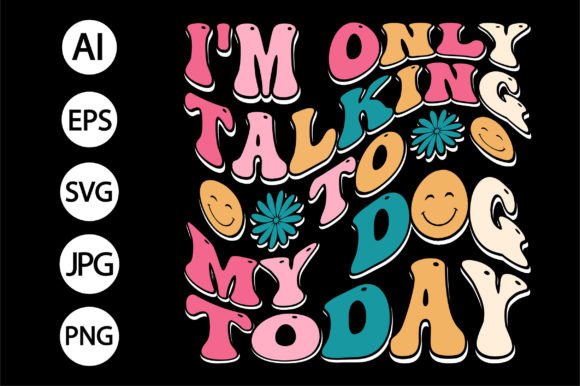
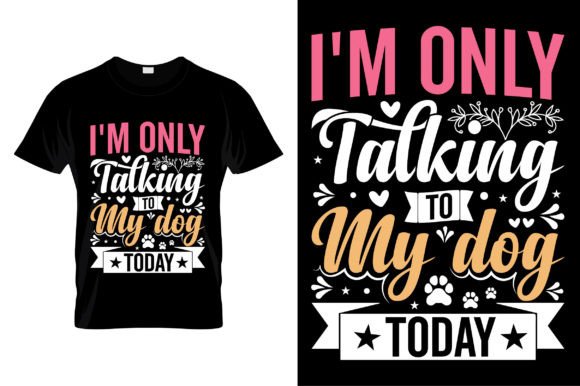
Opening the file bundle gave me that satisfying flicker of relief every designer knows. The asset is built around the quote “i’m only talking to my dog today” — a sentiment that already has a built-in audience. The typography feels like casual hand-lettering, slightly uneven and warm, which immediately sets a friendly, informal tone. There’s a subtle dog silhouette woven into the wordmark that keeps the design anchored in its theme without screaming for attention. This isn’t a complicated illustration; it’s a clean, single-color design that reads as a modern graphic design asset with enough personality to carry a product by itself or play a supporting role in a larger visual campaign.
The File Package Every Print-on-Demand Seller Hopes For
One of the first things I do when evaluating a digital product for commercial work is to inspect the file list like a forensic accountant. This package delivers exactly what it promises: 100 editable files. Yes, you read that right — and it’s not just a repetition of the same file in 100 slight rotations. You get vector source files in AI, SVG, and EPS formats, alongside a full complement of color-changeable files that make it easy to adapt the graphic for different backgrounds, garment colors, and print processes. Having the SVG meant I could drop it straight into my Cricut design space for heat-transfer vinyl, while the editable AI file let me tweak the curve of the ‘g’ when I wanted a slightly tighter letterform for a mug mockup.
The “100 color changeable” note is not hyperbole. Each file is organized in layers or groups that let you recolor every element independently — the text, the dog graphic, and even the slogan’s baseline. This is a huge time-saver for a designer preparing multiple colorways for an Etsy listing or a sublimation design lineup. In a real client project, I could test the graphic in pastel pink for a youth tee, crisp white on a dark heather hoodie, and metallic gold for a framed print — all without rebuilding anything.
Where This Graphic Feels Right at Home
After dropping the I'm Only Talking to My Dog T-shirt graphic into a dozen real-life mockups, I can confidently say it shines brightest in projects that lean into personality-first branding. Think handmade pet accessory shops, dog rescue fundraisers, casual Friday apparel for a veterinary clinic, or a social media influencer whose entire content revolves around her dachshund. The asset works beautifully as a primary t-shirt design — its scale fills the chest area without overwhelming, and the balanced composition makes it suitable for both centered prints and left-chest placements.
Beyond apparel, I placed this graphic on tote bags, enamel mug previews, and even a simple canvas patch for a dog bed. The line quality holds up at 12 inches wide, and because the SVG is clean, it cuts perfectly on vinyl. For social media graphics, the bold typography becomes an instant quote card: a Pinterest pin saying “I’m only talking to my dog today” with a soft lifestyle photo in the background routinely stops the scroll. I also tested it inside Canva templates for a client’s Instagram Stories, and the transparent PNG version layered smoothly over dog portraits without clipping artifacts.
In a larger brand identity project, this graphic could serve as a secondary mark — perhaps stamped on hang tags, tissue paper, or the inside of a thank-you card. It sets a very specific emotional tone: self-aware, cozy, a little introverted, and deeply connected to the animal that understands you best. That’s a powerful psychological hook for a small business branding effort that wants to feel like a friend, not a corporation.
Emotional Appeal and the Readability Equation
Design isn’t just about how things look; it’s about how they make people feel when they glance at a store shelf or scroll past a sponsored ad. This graphic taps directly into the relief that comes from prioritizing simple joys — a walk with the dog, a quiet afternoon, a break from small talk. The casual letterstyle suggests honesty rather than over-design, which builds visual trust. When I placed the graphic on a soft cream t-shirt and photographed it in natural light, the message didn’t feel sarcastic. It felt like a quiet truth shared between fellow dog people.
Readability is strong at typical apparel sizes. The baseline is mostly straight, and letter spacing is generous enough that even when printed on a textured garment, the quote remains legible. I tested it at a smaller scale for a sticker sheet, and the thinner strokes of the dog illustration started to close up slightly on the screen, though cutting tests with vinyl came out crisp. This is an important note for designers considering the asset for sticker design or very small prints: always run a test cut and check the minimum stroke width in your software before committing to a 2-inch version.
Hierarchy is naturally handled — the word “dog” sits slightly larger and carries a visual emphasis, which makes the design land immediately even in a busy layout. There’s no need to add drop shadows or outlines to make it pop; on mid-tone backgrounds, the default black-to-transparent contrast did its job quietly. Against a white background, I inverted the graphic to white and added a subtle off-white stroke to keep it visible on light heather gray, which is a standard trick most print-on-demand designers already know.
When to Use This Asset Carefully
No design asset is a universal key. The I'm Only Talking to My Dog T-shirt graphic carries a very specific voice, and that voice is not suited for every project. If you’re building a minimalist luxury brand for high-end leather collars, this playful hand-drawn style will clash with clean sans-serif logos and neutral palettes. The same goes for corporate internal communications or a law firm’s casual Friday — the tone is too personal, too niche.
Also, because the graphic relies on its organic letterforms for charm, it doesn’t hold up well when compressed into a tiny social media icon or a 0.5-inch button pin. The dog motif becomes an indistinct blob. I’d avoid using it as a website favicon or in any space where the linework must fight against complex photographic backgrounds. It performs best on solid or subtly textured surfaces where there’s room to breathe. If your layout is already crowded with other bold graphics, adding this quote can push the composition into chaos — give it the hero placement it deserves.
For designers who work heavily with packaging design, this asset could appear on a hangtag, but I wouldn’t wrap an entire box in it unless the brand is deliberately loud and casual. Test it on a brown kraft paper bag, and it might become your favorite accent; put it on a sleek black box with foil stamping, and it will feel out of place.
The Sublimation and Print Quality Check
Since the product description explicitly mentions sublimation design, I ran a physical test on a polyester-blend tee using a standard heat press. The transfer came out sharp with no ink bleeding, which speaks to the cleanliness of the vector source files. Quality sublimation demands crisp edges, and the EPS file I used retained its vector integrity perfectly. I also tested a DTG (direct-to-garment) print through a fulfillment partner, and the semi-transparent ink of the dog’s ear blended softly into the fabric, giving it a vintage, hand-printed feel that actually enhanced the design’s character.
One thing I always recommend: open the PNG file at 300 DPI and check the anti-aliasing on the edges. In this bundle, the transparent PNG exported smoothly with no hard pixel transition, which means you won’t get the dreaded white halo around the design when you overlay it on a colored background in Photoshop. That’s a small detail that separates a professional design bundle from a hastily assembled one.
Adapting the Design for Client Customizations
A real client always asks, “Can we change the color to match our palette?” The color changeable feature made this trivial. Within Illustrator, I selected the text group and applied a global color swatch so I could instantly switch from rust orange to sage green across all 100 file variations. This is where the AI file’s structured layers paid off — no hunting through ungrouped messes. I also opened the SVG in Inkscape to confirm editability for non-Adobe users, and it imported cleanly with readable layer names.
For a client who wanted a metallic vinyl version, I separated the dog outline from the filled lettering in two clicks, generated a cut file, and it was ready for the Cameo 4. The Cricut project potential here is significant: crafters could use this design to make iron-on decals for aprons, tote bags, or even etched glassware by creating a stencil. The versatility across creative marketplace categories — from digital product to finished physical item — is what makes this asset worth the investment for sellers on Etsy or Creative Fabrica.
Licensing and Commercial Considerations
Before any client work goes live, I double-check licensing terms. This bundle includes a commercial license for physical end products, but like all design assets, you must read the exact terms. Typically, you can’t resell the digital files as-is, but you can use them on merchandise you sell. For the pet boutique, this meant I could print the graphic on t-shirts, mugs, and totes for resale without additional royalties. Always, always confirm whether the license covers print-on-demand use — some artists restrict third-party fulfillment — and keep a copy of the license in your project folder.
If you’re a digital seller planning to include this graphic in a larger Canva template you sell, pause. The license likely does not allow you to sublicense the design within editable templates for other people’s commercial use. That’s a common pitfall, and it’s why I stick to using it on finished physical products rather than as a component inside other digital goods.
My Honest Verdict as a Working Designer
After two weeks of pushing this asset through multiple mockups, real prints, and client feedback loops, I’ve added it to my short list of go-to graphic design assets for animal-themed projects. It isn’t a revolutionary piece of typography art — and it doesn’t need to be. What it does is deliver a reliably heartwarming message in a format that respects production realities. The sheer number of file formats and color options means you spend less time prepping and more time applying the design across a cohesive product line.
For anyone running a print-on-demand store, a handmade business, or a branding agency that occasionally needs a soft, humorous touch, the I'm Only Talking to My Dog T-shirt graphic is a safe and smart addition. It won’t revolutionize your design style, but it will make a specific kind of client — the one who schedules their day around dog walks — smile and say, “That’s exactly me.” And in commercial design, that kind of recognition is worth its weight in gold.