Happiest Mama on Earth Sublimation PNG for Embroidery Projects
First Impression: A Design With Heart and Movement
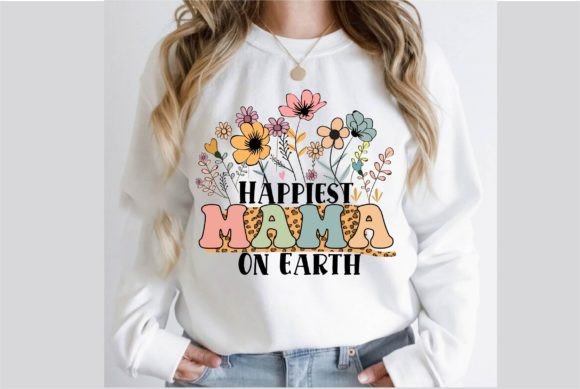
I opened Happiest Mama on Earth Sublimation PNG with the same curiosity I bring to any artwork that might land on a stitched garment. The mood hit immediately. It’s warm, a little whimsical, and completely focused on celebration. The lettering style carries a modern hand‑drawn flow, not stiff or mechanical. I could already imagine how that personality would translate into thread—soft curves, playful ascenders, maybe just enough bounce to make a finished piece feel personal. This isn’t the kind of design you tuck away in a folder. It’s the one you start mentally placing on a tote bag or a baby shower sweatshirt before you even check the file list.
Translating a Sublimation Graphic into Stitches
At its core, Happiest Mama on Earth Sublimation PNG lives in a graphic world. You get a crisp PNG at 4500×5400 pixels and 300 dpi, plus AI, SVG, EPS, PDF, and JPG. That folder structure is a gift for any embroidery professional who plans to digitize. I immediately pulled the SVG into my embroidery software. The vector paths were clean, which meant I could assign stitch types without rebuilding shapes from scratch. For the main lettering, I’d lean heavily on satin stitch—keeping it smooth and slightly glossy to hold that joyful tone. If the design includes small decorative dots or tiny flourishes, those might need a running stitch or a simplified fill so they don’t turn into dense blobs under needle and thread. Every element here feels intentional, but I always check whether a detail that looks stunning on screen can actually breathe on fabric.
Where This Design Really Belongs
In my mind, Happiest Mama on Earth Sublimation PNG already belongs on a roomy, natural‑colored tote bag. Picture a baby shower where each guest receives a bag with this design embroidered on the front pocket. It’s the kind of product that catches light without shouting, and that’s exactly what I look for when I’m picking designs for a boutique line. The phrase itself is so specific yet universal—it fits newborn announcements, first Mother’s Day gifts, nursing cover‑ups, and even a soft pillow cover in a nursery reading nook. I’ve learned that emotional readability is the secret weapon of any best‑selling embroidered product, and this design has it in abundance. Customers don’t just see words; they feel them. That instant connection is what makes a stitched item fly off the craft fair table.
Small Details, Big Impact—and Potential Pitfalls
Still, I never let a pretty design lull me into skipping the stitch check. If the text size on the original layout is smaller than about one‑third of an inch per letter when reduced to a common embroidery hoop, the satin border could close up delicate loops. I’d test the design at the actual size I intend to use—maybe four inches wide for a tote pocket, or slightly smaller for a baby onesie chest print. Tiny accent shapes, like stars or leaf sprays, need special attention. In a PNG they sparkle, but in thread they might need to be enlarged slightly or changed to a simpler outline. The good news? The high‑resolution file gives me an incredibly sharp reference. I can zoom in forever and plan exactly where a stitch angle should shift to keep the character dancing across the fabric.
Fabric, Hoop, and Stabilizer Realities
I always have a list of fabric questions rolling through my head before I commit to a design. For a light or medium cotton tote, I’d use a sturdy no‑show mesh stabilizer and a water‑soluble topper on any textured weave to keep the script crisp. On a stretchy baby bodysuit, a fusible cutaway stabilizer becomes non‑negotiable; otherwise that lovely lettering will distort after a few washes. Sweatshirts and hoodies are equally demanding. The loft of the fleece can swallow small text, so I’d bolden the stitch width just a hair. The good thing about Happiest Mama on Earth Sublimation PNG is that its overall shape isn’t overly complex—it’s probably a horizontal arrangement or a soft arc, which means it won’t fight tight corners on a cap or a curved pillow cover. Still, I’d avoid placing it on severely curved seams where tension shifts might break the rhythm of the text.
Thread Color Choices: More Than Matching
Since the design arrives as a print‑ready graphic, I have a massive advantage: I can sample thread colors directly from the PNG in my software and build a palette that honors the original vibe. A soft ballet pink, a muted mustard, or even a warm terracotta would pull out the gentle, happy energy. I’d also make a black‑and‑white stitch‑out to see if the design holds its weight without color—sometimes a design leans too heavily on hue for its personality. The high contrast of the design itself suggests it would read clearly even in a monochrome thread set, which makes it versatile for products where I want to offer multiple colorways without losing brand identity.
From a Designer’s Skillet: Embedding the Design into a Real Project
Here’s where theory meets reality. A few weeks ago, I was building a new product line around the theme of new motherhood. I needed a centerpiece design for a set of linen kitchen towels—gifts for a small maker’s market. I downloaded Happiest Mama on Earth Sublimation PNG and carried it through my usual workflow. I digitized the lettering first, keeping the satin stitch under 4mm wide to avoid snagging. The final embroidery ran on a cream towel with a light tear‑away stabilizer. The result? A piece that felt polished, heart‑led, and far beyond the simple word art I sometimes see sellers grab from free fonts. That test gave me confidence to also place the design on a matching apron and a simple cotton tote. Each item held its own because the design language stayed consistent, but the slightly different fabric weights gave it new life.
What Customers Will Actually Feel
Think about the person who receives a stitched product featuring Happiest Mama on Earth. They’re likely in a tender season—exhaustion, wonder, deep pride. A poorly embroidered design with puckered letters or uneven thread tension would undercut that emotion. But a clean, thoughtfully placed stitch‑out does the opposite. It feels intentional, keepsake‑worthy. In my experience, that’s what pushes a product from “nice handmade item” to “I’m going to buy three more for my friends.” The design already carries the sentiment; the embroidery execution simply needs to protect it. That means testing on a scrap of the final fabric, examining every serif and swirl, and adjusting tension until the back of the embroidery looks as neat as the front.
Commercial Use, Licensing, and Buyer Trust
Any creative entrepreneur needs to pause and check the fine print. Happiest Mama on Earth Sublimation PNG includes multiple file types, which suggests a professional asset meant for both personal and possibly commercial work. I always advise embroidery small business owners to confirm license terms before digitizing and selling finished pieces. If the license allows commercial use on physical products, this design becomes a powerful addition to a spring motherhood collection or an evergreen baby gift line. Even if you never digitize and only use it for sublimation mockups or product preview images, the sharp PNG helps build trust with customers by showing them exactly what the finished embroidery will feel like. I’ve used high‑resolution graphics like this to print photo‑realistic mockups that close sales before I even thread a needle.
Final Design Judgment Before the First Stitch
After everything—the digitizing walkthrough, the fabric tests, the color sampling—I’d categorize Happiest Mama on Earth Sublimation PNG as a confident, emotion‑driven design perfectly suited for baby‑related embroidery projects, family gifts, and small‑shop merchandise. It’s not overly complex, which makes it friendly for mid‑sized hoops and everyday garments, but it still has enough personality to stop a scroll on Etsy or catch an eye at a market stall. Just be kind to the smaller details, choose your stabilizer like you mean it, and always stitch a sample before you commit to a full run. When that’s handled, this design does exactly what it promises: it makes the person wearing it, or carrying it, feel like the happiest mama on earth—and that’s the kind of reaction any embroidery designer would pack up and take home.