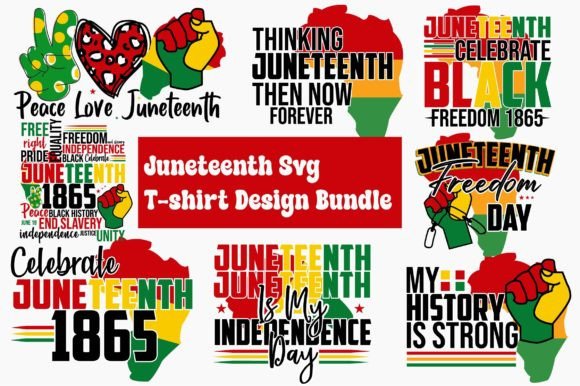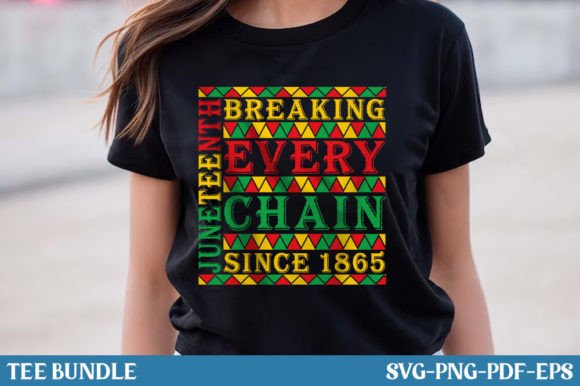
Breaking Every Chain Juneteenth Design Graphics for T-Shirt Crafts
When I opened the download folder for Breaking Every Chain - Juneteenth Design, the first thing that struck me was how cleanly the artwork carries its message. It does not try to do too much, and for a handmade seller who builds product collections around cultural moments, that restraint is exactly what makes this asset practical. The mood sits right between bold and dignified. It leans into a celebration aesthetic but holds enough structure that it does not look busy on a shirt, a tote, or a framed print. The visual language suggests strength without shouting, which means customers who shop for meaningful wearable pieces or understated home décor will be drawn to it immediately.
From a creator’s perspective, the composition works because it gives breathing room around the type and central graphic elements. That negative space matters more than most beginners realize. When you place this on a mockup, the eye lands where it should, and the design does not compete with shirt seams, mug handles, or binder ring holes in a planner. If your audience leans toward heritage-inspired apparel, modern gift items, or community-focused party décor, this graphic slots in naturally. It reads as confident but not aggressive, polished but not cold, and that balance helps handmade products feel both intentional and sellable.
First Impressions for a Crafter Testing Production Files
I loaded the PNG first because I always want to see how a design behaves before I commit it to a cut file workflow. At 4500×5400 pixels and 300 dpi, the canvas provides more than enough real estate for full-bleed sublimation prints on larger blanks. The transparency edges looked crisp, with no stray pixel haze around the letterforms. That is a relief, because cleaning up low-resolution edges is the fastest way to lose an afternoon that should be spent making actual products. Straight out of the folder, the graphic felt press-ready for sublimation mugs, pillow covers, and canvas pouches.
The EPS file opened smoothly in my vector software. I checked the wireframe view immediately, and the node structure was logical rather than overcomplicated. For a design that includes symbolic broken chain links and stylized lettering, complexity can easily spiral into cuttable chaos, but here the paths stayed manageable. If you run a Silhouette or Cricut machine, this matters enormously—clean nodes mean fewer weeding tears, faster cuts, and fewer wasted blanks when you are producing multiple items for a craft fair or a bulk order deadline.
How Breaking Every Chain - Juneteenth Design Fits Real Handmade Products
I test-placed this graphic across a range of product mockups before writing this review, because the difference between a pretty design and a working asset reveals itself only when you resize, recolor, and pair it with actual blank substrates. On a standard unisex tee, the proportions held nicely at 11 inches wide, which is my typical placement for adult apparel. The message stayed legible without dominating the shirt. On a 15-ounce ceramic mug, I scaled it down to fit the standard 3-inch printable area, and the central illustration remained distinct—no muddying of the broken chain motif even at that reduced footprint.
Tote bags were another strong match. The natural canvas texture, especially when I used a slightly distressed print finish, gave the design an organic feel that complemented the handcrafted tone of the artwork. I would absolutely run a small batch of these for a Juneteenth market event or a community pop-up. On smaller products like 3-inch vinyl stickers, the design worked better as a simplified version. I removed the smallest detail lines from the chain breaks before cutting. That small edit prevented snagging during weeding and gave me a cleaner sticker edge, which is something I recommend any sticker maker do before committing expensive adhesive vinyl.
Printables, Paper Goods, and Flat Product Collections
Where this design truly shines for my shop is in the printable category. The high-resolution PNG dropped perfectly into a 5×7 greeting card template. With a soft cream background and a subtle paper texture overlay, the graphic took on a warm, commemorative feel that would work for year-round gift cards, not just a single holiday push. I also tested it as a planner sticker sheet element and a wall art print at 8×10 inches. At that size, the detail in the chain links and the intentional kerning of the typeface become visible, and the piece holds its own as a standalone framed print.
If you sell digital files, note that the EPS lets you recolor the artwork infinitely, so you can release a coordinated set of Juneteenth printables in different color stories, metallic gold for elegant card suites, matte black for minimalist wall art, or deep crimson, green, and gold for heritage collections that span multiple product types. That adaptability is what turns one purchased asset into a small product line.
Cutting Vinyl, Sublimation Prints, and Production Workflow
On a Cricut Maker, I cut the design from Siser EasyWeed at about 10 inches wide. The font segments weeded cleanly, but I paused on the smaller chain link interiors. Those internal voids are doable, but I would not push them below a quarter-inch in future cuts. For heat transfer vinyl on onesies or youth sizes, scale up slightly or remove the finest interior voids. The design still reads beautifully when simplified. Silhouette users who favor PixScan for precise sticker placement will appreciate how the bounding box aligns squarely without odd stray anchor points pulling the registration off center.
For sublimation, I pressed the PNG onto a polyester-blend tote using medium pressure at 400 degrees for 55 seconds, and the black held dense and true. No color shift toward brown or green, which tells me the file’s color profile was built correctly. When you press onto foam core for coaster blanks or small ornaments, reduce the temperature slightly. The dense black areas retain heat longer, and the edges can ghost if you rush the cool-down. Let the blank rest under weight for 15 seconds after pressing for crisp edges on cylindrical items like tumblers.
Design Personality, Customer Appeal, and Branding Fit
The visual personality of Breaking Every Chain - Juneteenth Design lands closer to statement apparel than to soft decorative clipart, and that distinction will guide how you market it. Customers browsing for Juneteenth graphic tees, heritage-themed tote bags, or meaningful family gathering décor respond to imagery that feels substantial. This piece delivers that. The typography has structure, and the chain motif avoids the overly whimsical look that sometimes creeps into clipart-style assets. For handmade businesses that emphasize culture, storytelling, and quality over novelty, this graphic fits without forcing you to adjust your brand tone.
If your shop aesthetic is rustic, pair this with kraft paper tags and twine. If you lean modern, use a monochrome palette with crisp white negative space. If you serve a customer base that values layered cultural expression, layer this graphic with floral or geometric secondary elements pulled from other design assets in your library. The art works as a focal piece rather than a background filler, so give it that stage when building product photography compositions.
Where to Use It Confidently
After running this through several production tests, I would confidently put Breaking Every Chain - Juneteenth Design into the following product categories without hesitation: adult t-shirts, unisex hoodies, canvas tote bags, 15-ounce ceramic mugs, hardcover journal covers, framed printable wall art, greeting cards, gift tags, tumbler wraps with a matte finish, and digital planner covers. The asset is well-suited for bulk production because the artwork is robust enough to press or print repeatedly without requiring constant file correction. For Etsy sellers and small business owners running seasonal collections, this allows you to batch create inventory efficiently, which protects your margins when event season demands volume.
What Needs Careful Handling
Be thoughtful with projects that require very fine cutting at sizes below 2.5 inches. The internal chain voids become a weeding liability. Simplify those details for sticker sheets or mini-label sizes. On layered vinyl projects, test registration carefully if you plan to do multicolor versions, the spaces between letter elements are tight, and a slight misalignment becomes obvious on a finished garment. On extremely dark garments like deep navy or charcoal, the standard black may lose contrast. For those substrates, consider a heat-transfer vinyl color substitution or add a subtle white offset behind the design. On highly textured blanks like heavily ribbed tank tops or coarse burlap pillows, fine elements lose definition. Stick to smooth-surface blanks for the strongest reproduction.
Technical Checks Before Selling Finished Products
Before you list a single product made with this graphic, run a small test. I print a single shirt, wash it inside out twice on cold, dry it on low, and check for cracking or fading. This design passed that test with proper pressing parameters. Check the EPS node density for your specific vinyl cutter model, Cricut users will need to upload and review the paths, while Silhouette Studio Business Edition users can edit directly if needed. Preview the PNG transparency at actual print size in a mockup tool, not just at screen resolution, to catch thin edge artifacts. Print a test sheet on the exact paper you will use for greeting cards or art prints. Colors shift between coated and uncoated stock, and a deep inky black can read as flat charcoal on matte cardstock if your printer profile is not dialed in.
Commercial Use, Brand Building, and Shop Strategy
For sellers building a cohesive product line around Juneteenth and cultural celebration, this graphic provides a strong anchor piece. You can extend it with complementary design bundles that include coordinating floral graphics, geometric patterns, or simplified icon sets for earring cards and thank-you notes. From a print-on-demand standpoint, the file dimensions work directly inside major platforms, eliminating the resize guesswork that sometimes distorts imported PNG design uploads. Confirm your commercial license terms before listing, but if those align with your shop’s usage needs, this becomes a reliable production asset rather than a one-off experiment.
Think about how the design functions across your entire product ecosystem. A customer discovering you through a Juneteenth t-shirt may return for a matching mug set, a coordinating party banner, or a set of sticker sheets for scrapbooking. When one strong graphic anchors that product family, your shop tells a clearer visual story, and repeat buyers learn what to expect from your brand. That consistency is what separates a hobby-level store from a sustainable handmade business that earns year-round trust.
Practical Tips for Cricut and Silhouette Crafters
If you are a beginner or intermediate vinyl crafter, do not skip the test cut. Even though the files arrived clean, your blade depth, speed settings, and mat stickiness will differ from mine. For intricate chain details, I recommend the Washi setting on a Silhouette Cameo with a fresh blade, or the Cardstock Plus setting on a Cricut Explore with light pressure. For PNG-based sublimation work, mirror the image if your blank requires it, and always press on a silicone pad with light pressure to prevent seam marks. These small workflow tweaks protect your blanks and extend the life of your heat press accessories.
When building out a product mockup for Etsy or a creative marketplace listing, place the graphic on a lifestyle shot rather than a plain white background. This design’s structure shows cleaner against contextual settings like folded fabric, wooden table surfaces, or soft flat lays. If you use a scene mockup, the type remains sharp even when the overall image compresses for thumbnail views. That visual clarity increases click-through on platforms where buyers scroll fast.
Final Working Notes for Handmade Sellers
After multiple test runs across substrates, I can say this is not a delicate, fussy graphic that needs kid-glove treatment, nor is it a purely decorative piece with no backbone. It occupies a middle ground that rewards makers who prepare their files thoughtfully, choose blanks with intention, and understand their audience’s expectations. The combination of high-resolution raster data and an editable vector backbone means you can serve customers who want apparel, stationery, home goods, and digital downloads from one source file.
If you are preparing for a cultural heritage event, a Juneteenth product drop, or simply expanding your shop to include pieces that carry deeper meaning, Breaking Every Chain - Juneteenth Design offers a solid starting point. Respect the file quality, test at production sizes, pair it with complementary fonts and materials that match your brand voice, and watch how buyers respond when the product itself tells the story as clearly as the message on the design.